

As municipalities and Clinton County continue to face fiscal challenges and seek opportunities for economic diversification, data center development offers a unique opportunity to strengthen our tax base, upgrade critical infrastructure, and position our community for long-term stability. This letter addresses several key considerations essential to understanding the benefits of attracting a data center to our region.
Short Explanation of Data Center vs. Data Mining
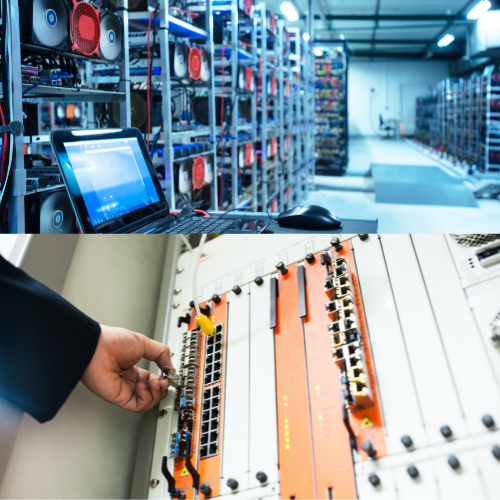
A data center is a physical facility that houses servers and networking equipment to store, process, and deliver digital information, much like a highly secure utility building for data. Data mining, by contrast, is an analytical process that uses algorithms and statistics to sift through large datasets to find patterns, trends, and insights. In short, a data center is where data lives and moves, while data mining is what organizations do with that data to inform decisions. A popular example of data mining is in the discovery of cryptocurrency (Bitcoin). Data Mining centers are often small and modular and have no real property tax value because they are not assessed in the same manner as data centers.
A Financial Game Changer for Local Services
Data centers represent some of the highest capital investments per acre among industrial uses. These facilities generate hundreds of millions of dollars in taxable improvements, creating substantial long-term property tax revenue that supports schools, public safety, infrastructure, and local government services.
The evidence from other communities is compelling. In Iowa, Cedar Rapids offers a strong example of the local fiscal impact data centers can create. City officials estimated the data center project could generate $1 billion in total property taxes over the applicable rebate periods, while also committing up to $18 million to a community betterment fund for city improvement projects and nonprofit support.
Clinton has expressed interest in pursuing various community improvement projects. Constructing a sports complex and providing amenities for youth entertainment, enhancing our local trails system, demolishing unsightly buildings, improving roadways, repairing existing attractions, and extending necessary infrastructure to support residential development all require funding. The reality is that the cost of these projects is not shrinking. If anything, the financial demands of providing even basic services continue to increase with no sign of slowing.
What if the attraction of a data center could offset the costs and expedite the chance of turning these dreams into reality? Would it be worth pursuing if it meant eliminating the financial burden on residential taxpayers? How can we grow our population fast enough to support the expense of projects designed to enhance our quality of life?
The mission of attracting and retaining young families to ensure future growth requires offering options that appeal to a new generation. As a community, we often wish for change; however, positive change is only possible if we expand our local tax base. An expanded tax revenue helps stabilize or reduce the tax burden on existing residents and businesses by spreading costs across a larger base of taxable value. We cannot depend solely on residential property development to offset the increased costs of managing municipal and county government.
It is also important to respect private property rights in this discussion. If a proposed site involves privately owned land, the landowner has the right to decide whether to sell to a developer and diversify the property's value, subject to lawful zoning, permitting, and local approval processes. Local government has an important role in setting rules and reviewing projects. Still, it should not substitute its preferences for a private owner's lawful right to pursue an opportunity that can create value for the owner and a broader benefit for the community.
Planned Coordination & Infrastructure Investment
A common concern about data center development involves electrical capacity. These facilities do require significant power; however, all usage is planned years in advance in coordination with local electric providers. Most importantly, developers fund necessary infrastructure upgrades themselves; they do not reduce service capacity or reliability for residents and existing businesses.
Fee schedules and timelines are established through close coordination with utility providers to ensure an uninterrupted supply of electricity to residential and commercial customers.
Modern data centers employ highly efficient cooling systems, many of which use air-cooled or closed-loop designs that emphasize water recirculation. Water use is regulated, permitted, and continuously monitored by local authorities to ensure responsible resource management. Unlike residential water service, water used in these systems is recirculated over considerable periods to support equipment cooling, meaning a gallon in does not equal a gallon out. After being used to cool the facility, the effluent is discharged into the municipal sewer system and processed at the regional wastewater reclamation facility.
Rather than straining our infrastructure, data center projects include developer-funded upgrades to utility systems, fiber connectivity, and road infrastructure. These improvements strengthen regional capacity and support future economic development opportunities that benefit all communities involved.
Jobs, Investment, & Long-Term Partnership
Beyond tax revenue and infrastructure improvements, data centers generate meaningful economic activity in Clinton. During the multi-year construction phase, data center projects create hundreds of temporary jobs across a variety of skilled trades, engineering, and support services. A construction project of this size ensures that temporary employment lasts for well over five years, allowing workers to earn the means to reinvest their wealth in the community through retail, food service, home improvements, and more.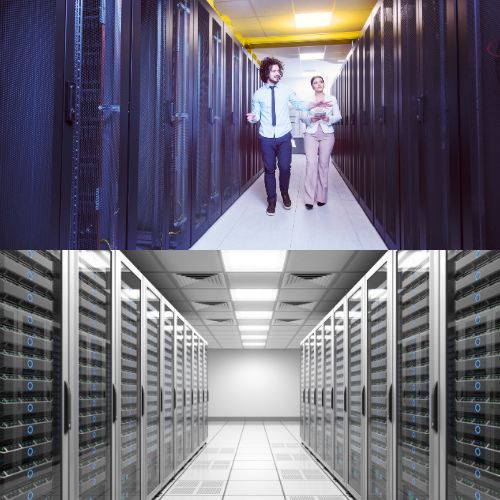
Once operational, data centers provide long-term technical positions with competitive wages, strong benefits, and ongoing training. These roles align well with electrical, mechanical, and industrial skill sets already present within Clinton's workforce.
Data centers are designed to operate for 30-50 years, guaranteeing predictable tax revenue and enabling reinvestment in equipment and infrastructure throughout the facility's lifespan. Data center developers actively support the communities where they operate through workforce partnerships focused on Science, Technology, Engineering, Arts, & Mathematics (STEAM) education programs, nonprofit support, collaboration with local emergency services, and projects that enhance the quality of place and residents' overall well-being.
In reference to the Cedar Rapids, Iowa, data center project, developers are providing up to $18 million in community betterment payments for local improvement projects and nonprofit support. Through property tax and community betterment funds, Iowa communities can negotiate from a position of strength and secure both tax-base growth and direct financial benefits. This long-term impact ensures funding for projects that create jobs, drive population growth, and alleviate the tax burden on residents.
Environmental & Community Considerations
Data centers are low-traffic, quiet facilities with no smokestacks or emissions. Modern systems operate with maximum efficiency and are regulated through local permitting authorities. Noise levels are monitored to ensure compliance with published local limits, and facilities use professional architectural design, landscaping, setbacks, and screening in accordance with local zoning and development standards. At the property line or in nearby neighborhoods, noise is typically designed and mitigated to meet community standards in the 50–60 dB range. To put that level into perspective, a home dishwasher, washing machine, and clothes dryer produce noise levels comparable to those of a data center.
Any incentives offered are performance-based and designed to generate community value, including the developer's upfront investment in infrastructure improvements, such as utility extensions and road construction. As a professional economic development organization, Grow Clinton focuses on an immediate return on investment. Outcomes will not benefit the developer alone at the expense of the communities they serve.
Bad deals have created a negative perception of data center projects; however, with a community-first mindset, we will negotiate to guarantee that upfront value is realized before a developer receives any financial benefits, including property tax abatements or rebates.
A Forward-Looking Opportunity
Data center development represents the evolution of today's economy. These facilities are essential infrastructure in the digital age, supporting everyday services like online banking, medical records, manufacturing systems, emergency communications, and business operations that we all depend on.
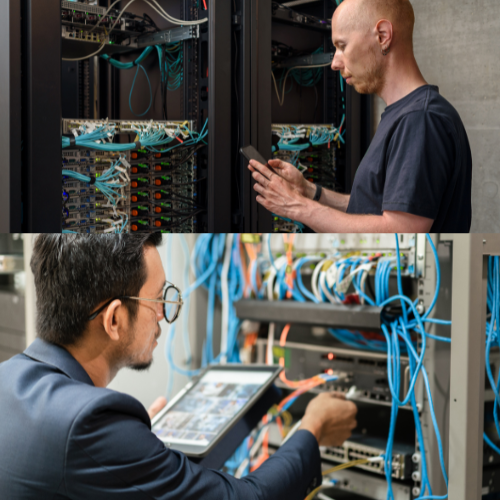 I often encourage individuals to view data centers as a high-demand utility. When we wake up in the morning, we depend on the faucet to provide water for a pot of coffee. When we flip the light switch in our closet, we rely on electricity to power a bulb so we can choose today's outfit. When the bitter cold of winter bites at our toes, we want our natural gas to be available to heat our home. Like electricity, water, and natural gas, data centers are essential to our everyday activities in a digital world.
No data centers means no Facebook, Instagram, TikTok, etc. It is difficult to justify the desire for uninterrupted access to online tools designed to make our lives easier and more connected without data centers.
By attracting a data center, Clinton would not only expand its tax base but also reinforce its role as a future-focused community ready to support advanced infrastructure, technology-driven growth, and long-term private investment.
As I see it, we have two options: we can deny the development of data centers, stifling the influx of capital necessary to grow as a municipality and allowing the massive amount of property tax revenue to go elsewhere, or we can take full advantage of these opportunities by supporting data center development with a community-focused approach on private landowners' rights and future economic success.
I encourage community members and elected leaders to learn more about data center development and the opportunities it presents for Clinton's future.
If you have any questions, please direct them to:
 Andy Sokolovich
President & CEO
Grow Clinton | Clinton, Iowa
O: (563) 242-5702
asokolovich@growclinton.com